
Welcome to Valley Dental Group
About Us
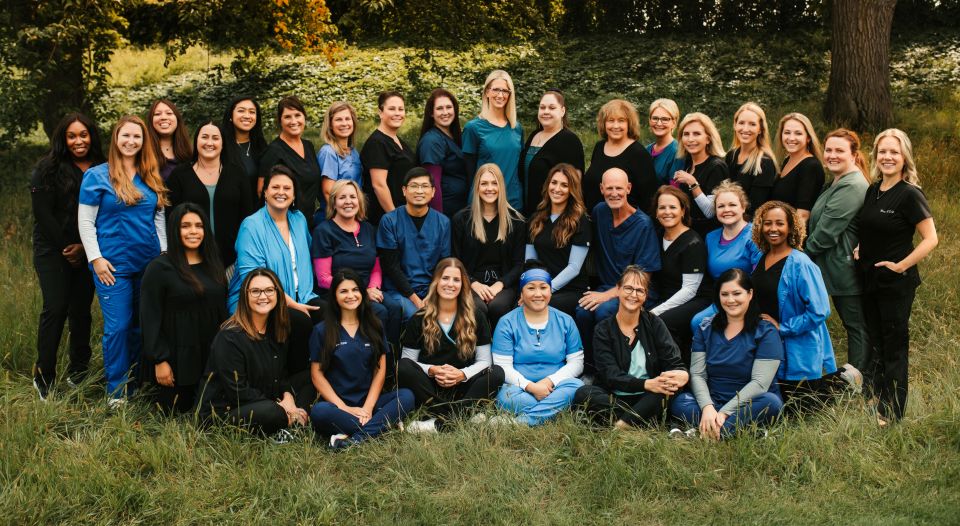
Valley Dental Group was founded in 1974, with a vision for a dental practice that would be able to offer both general and specialty dental services to patients in one setting. For over 50 years Valley Dental Group’s mission has been to provide lifetime quality care to our patients.
Valley Dental Group is a general and multi-specialty practice that provides a full range of services in a personal, caring, and convenient setting.
We are open Monday-Thursday from 7:00 AM to 7:30 PM and Friday from 7:00 AM to 3:30 PM. Please call our office at 763-544-2213 if you have any questions.
Goals and Objectives:
- To provide our patients with the highest quality health care experience possible.
- To care for patients in a comfortable and efficient setting with family-like hospitality, using state of the art managerial and health care technology.
- To be a leader in dental health services in the communities and market segments we serve.
If you have questions about the dental treatment that is right for you, our team would be happy to provide you with the information you need. Call us at 763-544-2213.
Infection Control
We take patient safety very seriously and adhere to the highest standards of cleanliness and sterilization. Our sterilization policies meet or exceed the CDC guidelines, and our team is well trained and monitored on all daily sterilization requirements. Here are some of the measures we take to ensure your safety;
Disinfection of counters and all surfaces including; countertops, chairs, trays, handles, patient protection eyewear, and even the pens used in the treatment rooms are sterilized after each patient visit.
- Hand washing- at the start of the day all clinical team members wash their hands thoroughly with an antibacterial soap; this is continued throughout the day. Before each patient all team members use a commercial grade instant hand antiseptic that is tested to kill greater than 98% of other harmful bacteria within 15 seconds.
- Face masks and gloves – during dental treatment each clinical team member wears a new face makes and exam gloves.
- Barriers – after each patient, the room is sterilized, and new barriers are placed on the chair, handles, and switches.
- Disposable items – disposable items are used whenever possible.
- Suction Lines – each day the suction lines are flushed, and a sterilizing solution used over night to prevent bacteria from colonizing in the lines.
- Water Lines – all water lines are flushed and drained at the end of each day and sterilized as directed. Testing on water lines are done on a regular basis.
- Instruments – all instruments used in patients care are cleaned and heat sterilized. Each sterilization batch is tested to ensure complete sterilization. On a weekly basis out sterilizing equipment is tested by an outside agency to ensure your safety.
We assure you that every precaution is being taken to ensure your safety. We welcome any suggestions you may have for improvement.